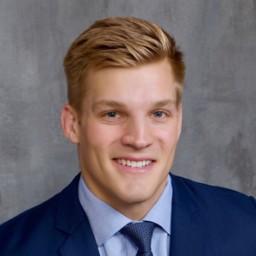
When I was a fourth year medical student, I suffered from months of terrible specialty indecision. Attending medical school at University of Washington allowed me travel back home to Alaska, where I did my preclinical years and was exposed early on to the world of rural general surgery. My surgery clerkship had me posted at a level II trauma center in Providence Hospital in Anchorage, and I got the full experience. First assisting daily, scrubbing into anything I wanted, minimal rounding, and even trying my hand on the sticks with a skin-to-skin lap appy. It was mind-blowing, and I remember finishing a 24-hour stint and feeling extremely invigorated. DESPITE that, as I started exploring the world of surgery, it was very overwhelming. I knew approximately zero residents or attendings in the field, and my major sources of information were Reddit (shoutout r/medicalschool) and SDN. Both highly informative and both equally anxiety-inducing. After a few weeks of searching and reading stuff online, I started to feel like I would a) never have a chance of matching, and b) if I were lucky enough to match, my personal life / love life / kids / health / etc would be effectively obliterated. At the same time, it became evident that doing a sub-internship ("sub-i") in Seattle would be a stark contrast to my month in Anchorage. At this point I really did not know anyone in the field, had minimal exposure, and had a constant internal battle of what to do.
Ultimately, I decided I would do internal medicine. It very much felt like I was settling, even as I decided this. I made a conscious choice -- in my mind, I convinced myself I was willing to forego the "excitement" of work if it meant that I would be able to have a life outside of work. Searching for people to talk to about this, I found a wide spectrum ranging the few attendings that were 10-15 years out into their practice to family and friends who knew approximately zero about surgery (or medicine for that matter). It was extremely unhelpful and disorienting to navigate a fully new world without good mentorship where I felt like I was already behind, accentuated by the fact that I was coming from Alaska with zero research exposure. My application for IM came together as I slogged through a MICU rotation, but as I got ready to start my interviews in early September, I felt a growing sense of dread and unease. I kept checking the surgery programs at the same places I was about to interview, and felt a much stronger interest in what the General Surgery rotation schedules looked like. I put out some feelers to the UW Surgery Dept / guidance counselor, who told me pretty much point blank that it was too late and that my Step 1 score would hurt my chances at any decent program. That uneasy feeling continued to grow, until I woke up one morning and literally bolted upright in bed saying out loud "I can't do medicine, I have to do surgery". I scrambled to set up a surgery sub-i at UW, and resolved myself to a new plan: I would do a few days of the sub-i and see how it went, then make my decision at that point. First day on the sub-i, I went to pull an abdominal drain on a post-op, and I remember that inflection point, feeling like even an insignificant action such as pulling a drain made me realize I needed to do something more physically involved and task-oriented.
The rest is a blur. I withdrew my apps, scrambled around looking for a research opportunity and fell into an ENT grant that had been unfilled. I took a LOA starting in the new year which allowed me to get my new application in order and complete a few more sub-i rotations in order to get some letters of rec. The whole process was messy, exceedingly stressful, and by the end of it while I felt very happy and secure in my decision, I was absolutely fried.
Fast forward to now -- I'm a PGY5 about to enter my final year of residency at a busy academic general surgery residency program. Since that fateful morning in Seattle when I decided to switch into Gen Surg, I have had zero regret at all about my specialty choice. I am pretty candid about the fact that I may have had regrets along the way about going into medicine as a field, but that has never extended to surgery. Additionally I should make it clear that I have a huge amount of respect for Internal Medicine docs and the work they do, I just realized it wasn’t for me. Life has been good to me -- I have an amazing fiance, my friend circle is strong and diverse and I've been able to maintain great connections with the network I've developed from home in Alaska to Montreal for undergrad, Seattle for med school, and now LA for residency. When I hear people say the age old quip about not doing surgery if there's anything else in your life you love more, I call BS. Admittedly, this is not an easy journey and I can only speak to my experience, but I do think it's possible to still cultivate a good life outside surgery and I'm happy with my decision.
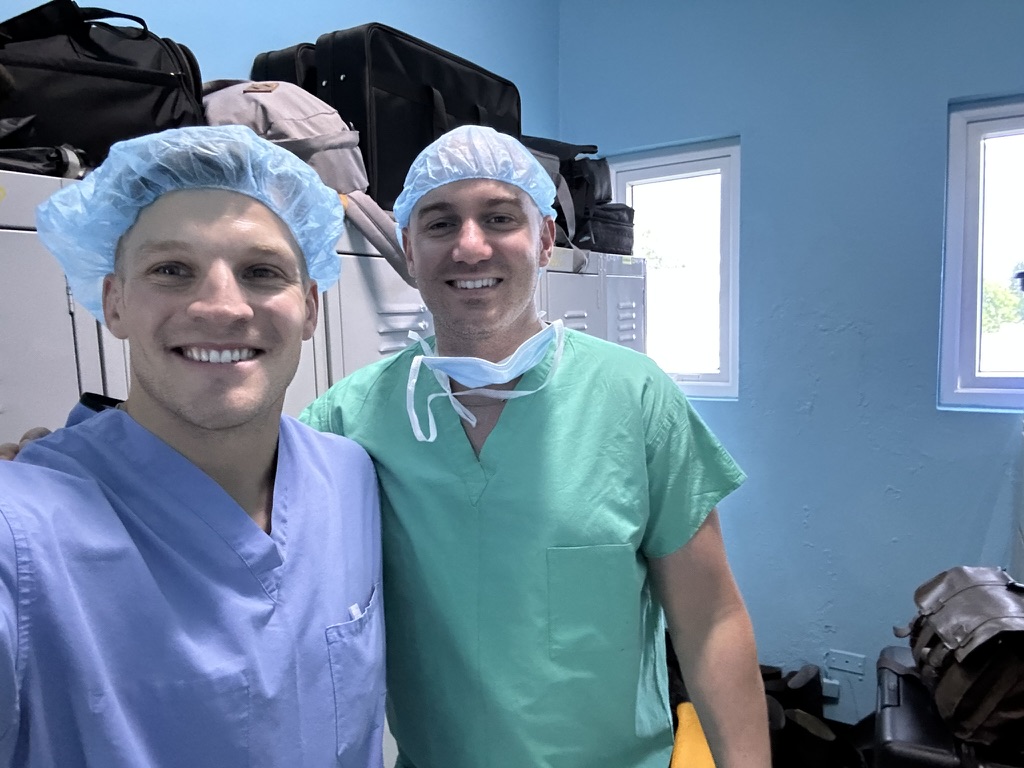
These ramblings bring me to MENTORx, which is a passion project of mine that I started working on out of what I feel is a true necessity. In third and fourth year of medical school, I would have killed to be able to talk to someone 1-2 years ahead of me. I distinctly remember feeling that I either didn't know anyone who would be able to understand my situation, or that I didn't want to bother the already busy residents/attendings that I had met along the way. Remembering how I felt, I've always felt passionate about trying to pay it forward to students who are going through many of the same struggles. Suture workshops, intern orientations, mock interviews -- these are all ways during residency that I found I could help make a difference. However, as a fourth year surgery resident last fall, I was giving 1-3 mock interviews a week while also trying to balance a 70-80 hr work-week, which wasn't really feasible. Also - I had students wanting to connect with other specialties. As I realized that there was a real pain point here, I started manually connecting people. My friend (and now co-founder) Cam was one of the first to help, offering his services as a newly graduated Trauma / Acute Care Surgeon to talk to med students and help them get prepared for ERAS (the hellish residency application process). We had talked about this same issue a few months prior when we were on a surgical mission in Jamaica the following June, but didn't quite make the connection at that point. Through brute force, I started linking my friends up with students using a combination of Tally, Google Forms, and Calendly scheduling. It was very painful and clunky - but the feedback was resoundingly clear - this was something students were finding useful.
After 20-30 sessions, Cam and I decided that this was probably worth investing some more time into -- partially so that we could test it out and make it legit, and secondly to relieve some of that manual matching burden we were both dealing with. With the advancement in vibe-coding, my computer-science-challenged brain scrapped together a functional MVP in less than two weeks. Real databases, scheduling capabilities, email loop chains. In a matter of weeks, I realized that I could essentially put all of our experience into building out a marketplace and opening this mentorship up to anyone. Free, paid, whatever types of sessions people wanted to host. As the excitement grew and I suppressed the desire to over-feature everything, I continued to think about the whole journey, and realizing that while it was easiest for us to start with the med-student to resident connection, the pre-med to med-student connection might be even more helpful. Coming from a small liberal arts school? No doctors in your family? Introverted?? By opening this up and making it accessible, all of these people get a better shot. Same for med students; coming from a smaller school, not as good at networking or "playing the game", don't know about SDN/Reddit or don't have enough xanax to suppress the forum anxiety? We could solve for that.
So that's where we're at. The whole goal of this site is to make mentorship and coaching for people in medicine more accessible. Many people may think mentorship is free, and we support that 1000% on our site. If you want paid services such as more curated strategy, mock interviews, application review - you can find that here. If you're a med student or resident and you've come to the same realization that most of us do that it's extremely hard to make any side cash when you're working such a rigorous schedule, we hope that MENTORx can allow you to make a little cash and also give you skills that you can share both on your CV or just utilize in your career.
It's still very early on, but the next steps for MENTORx are evolving quickly and exciting. We're going to focus on providing high quality mentors to those who are searching. We've done one workshop for pre-meds with a good turnout where several of our fantastic med students went through their experiences - and people seemed to love it! I think we'll continue to expand on this and potentially do some more longitudinal workshops to help people prepare better. We hope that this serves as an adjunct to the natural mentoring as well as the forums and that this serves as a replacement for the overpriced "medical school consulting" or "residency bootcamps" that charge thousands of dollars from desperate and motivated premeds and med students.
If you're interested in being a mentor, or a mentee, let us know. We can work with you to make that happen. If you have suggestions on things that are stupid or don't make sense, also let us know! We are early on and always evolving and most importantly just want to make people feel more supported through this process.
-CIA
Want personalized guidance?
Book a 1-on-1 session with a med student or resident mentor.
Browse Mentors →